

-
Homepage

-
Sealing knowledge
- Flat Gaskets – Materials, Selection, and Technical Fundamentals
Flat Gaskets – Materials, Selection, and Technical Fundamentals
Flat gaskets are among the most frequently used sealing elements in mechanical and plant engineering. They seal static connections, primarily flanges, housing covers, and pipe unions, against the leakage of liquids and gases.
The selection of the correct material depends on the medium, the temperature, the pressure, and the applicable standards. This page provides a structured overview of functionality, material types, selection criteria, and standards.

What is a flat gasket?
A flat gasket is a flat, sheet-like sealing element that is clamped between two opposing surfaces. The sealing effect is created by the plastic or elastic deformation of the gasket material under the contact pressure of the connecting bolts:
The material fills microscopic irregularities in the flange surfaces, thereby preventing the passage of media. Depending on the material, the gasket reacts either predominantly elastically (returning to its original shape after decompression) or predominantly plastically, meaning it deforms permanently and must be replaced after the connection is loosened.
Flat gaskets are static sealing elements: they seal stationary connections and are not suitable for dynamic applications such as shafts or pistons. Their primary field of application includes flange connections in piping systems, valves, pumps, and pressure vessels.
Soft gasket, fiber gasket, metal gasket – what is the difference?
The term "soft gasket" is the umbrella term for all flat gaskets made of non-metallic materials. Within this group, a distinction is made between elastomer-based gaskets (rubber, EPDM, NBR, FKM) and fiber gaskets (also known as compact gaskets or CNAF gaskets).
Fiber gaskets such as Klingersil® consist of a fiber framework with an elastomer binder and are specifically designed for static flange applications under high pressure and elevated temperatures.
Metal gaskets, such as spiral wound gaskets, ring-joint gaskets, or solid metal flat gaskets, are used where soft gaskets reach their limits: at very high pressures, extreme temperatures, or highly aggressive media in petrochemistry and power plant construction. They require higher contact forces and belong to a separate area of planning.
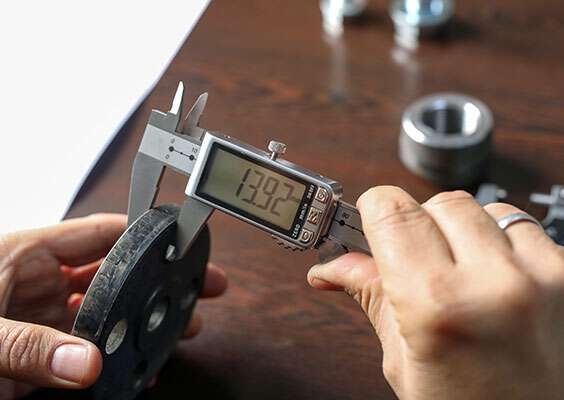
Flat Gasket Materials – Overview and Basis for Decision-Making
Material selection is the most important decision in flat gasket design. No single material is suitable for all applications; each material has defined limits regarding temperature, pressure, and media resistance.
The following table shows the most common materials with their core properties:
| Material | Temperature Range | Typical Media | Strengths |
|---|---|---|---|
| NBR (Nitrile Rubber) | -30 °C to +120 °C | Mineral oils, fuels, greases | High compressive elasticity, cost-effective |
| EPDM | -40 °C to +120 °C | Water, steam, acids, alkalis | UV and weather resistant, food-grade |
| FKM (Viton®) | -20 °C to +200 °C | Hydrocarbons, chlorine, fuels | Broad chemical resistance |
| PTFE (Teflon®) | -200 °C to +260 °C | Almost all media (pH 0–14) | Universal chemical resistance, FDA-compliant |
| Fiber Material (Klingersil®, Novapress®) | -100 °C to +140 / +250 °C | Oil, gas, steam, water, chemicals | High compressive strength, broad approvals |
| Graphite | -240 °C to +550 °C | Steam, acids, alkalis, chemicals | Extreme temperatures, Fire-Safe |
| Silicone (VMQ) | -60 °C to +200 °C | Food, pharma, air | Food-grade, good aging resistance |
| Novamica Thermex (Mica materials) | -100 °C to +1000 °C | Exhaust gases, hot gases, aggressive chemicals, boiler applications | Extremely heat-resistant, high chemical resistance |
Rubber flat gaskets (NBR, EPDM, FKM, Silicone) are suitable for low to medium operating pressures and moderate temperatures. Fiber gaskets such as Klingersil® cover higher pressures and temperatures and are often the only approved option in regulated applications (gas, drinking water, oxygen). Finally, graphite gaskets take over where organic materials fail.
How to choose the right flat gasket?
Material selection follows a clear sequence: first, define the operating conditions (medium, temperature, pressure); next, check regulatory requirements (approvals); and only then decide on a material. A common mistake is the reverse approach—choosing a familiar or inexpensive material first and then hoping it meets the requirements.
For most standard flange applications in industry and mechanical engineering, the following rule of thumb applies: NBR for oil and fuel, EPDM for water and aqueous media, FKM for aggressive organic chemicals, fiber material (Klingersil®) for gas, steam, and regulated applications, PTFE when the medium is incompatible with any other material, and graphite for anything beyond 250 °C. Order the right flat gaskets now from Kofler - Dichtungen!

Get in touch with us!
We perform best under pressure! Personalized advice for the highest demands and a fast delivery guarantee ensure your satisfaction. Contact our sealing experts.
We look forward to your inquiry."
Standards and Dimensions: DIN, EN, and ASME for Flat Gaskets
Flat gaskets for flange connections follow standardized dimensions derived from the flange standard and the nominal pressure. In Europe, DIN EN 1514-1 (flat gaskets for PN flanges according to DIN EN 1092-1) is the authoritative standard. This standard defines the inner and outer diameters of the gasket based on the nominal diameter (DN) and nominal pressure (PN).
In American and international plant engineering, ASME B16.21 serves as the reference standard for flat gaskets on ASME flanges (Class 150 to Class 2500). These dimensions differ from the European DN/PN series and are not compatible. For international projects, clarifying the flange standard is therefore the first step before any gasket order.
The nominal pressure (PN) indicates the maximum operating pressure level at a reference temperature of 20 °C. As the operating temperature increases, the permissible operating pressure decreases according to the pressure-temperature curve of the respective material. For design purposes, the combination of maximum operating pressure and maximum operating temperature is always decisive, rather than the individual values in isolation.
Flat Gaskets at Kofler - Dichtungen
Kofler - Dichtungen manufactures flat gaskets from all common materials – fiber material (Klingersil®, Frenzelit Novapress®), graphite, PTFE, NBR, EPDM, FKM, and silicone – according to flange standards (DIN EN 1514-1, ASME B16.21) or custom drawings. Production is carried out via waterjet cutting or punching, starting from quantities of 1 piece, with Turbo Service available for urgent requirements.

FAQs regarding flat gaskets



How do I measure a flat gasket correctly?
Can a flat gasket be reused?
Which flat gasket is suitable for steam applications?
What does "custom flat gasket" mean?
What is the difference between a flat gasket and a spiral wound gasket?
